
10 Tips for Selling Used Clothes on Vinted in the UK: Start With Your Own Wardrobe
Start selling clothes you already own with ten practical UK Vinted tips on photos, prices, honest descriptions, postage and tracking your first sales.
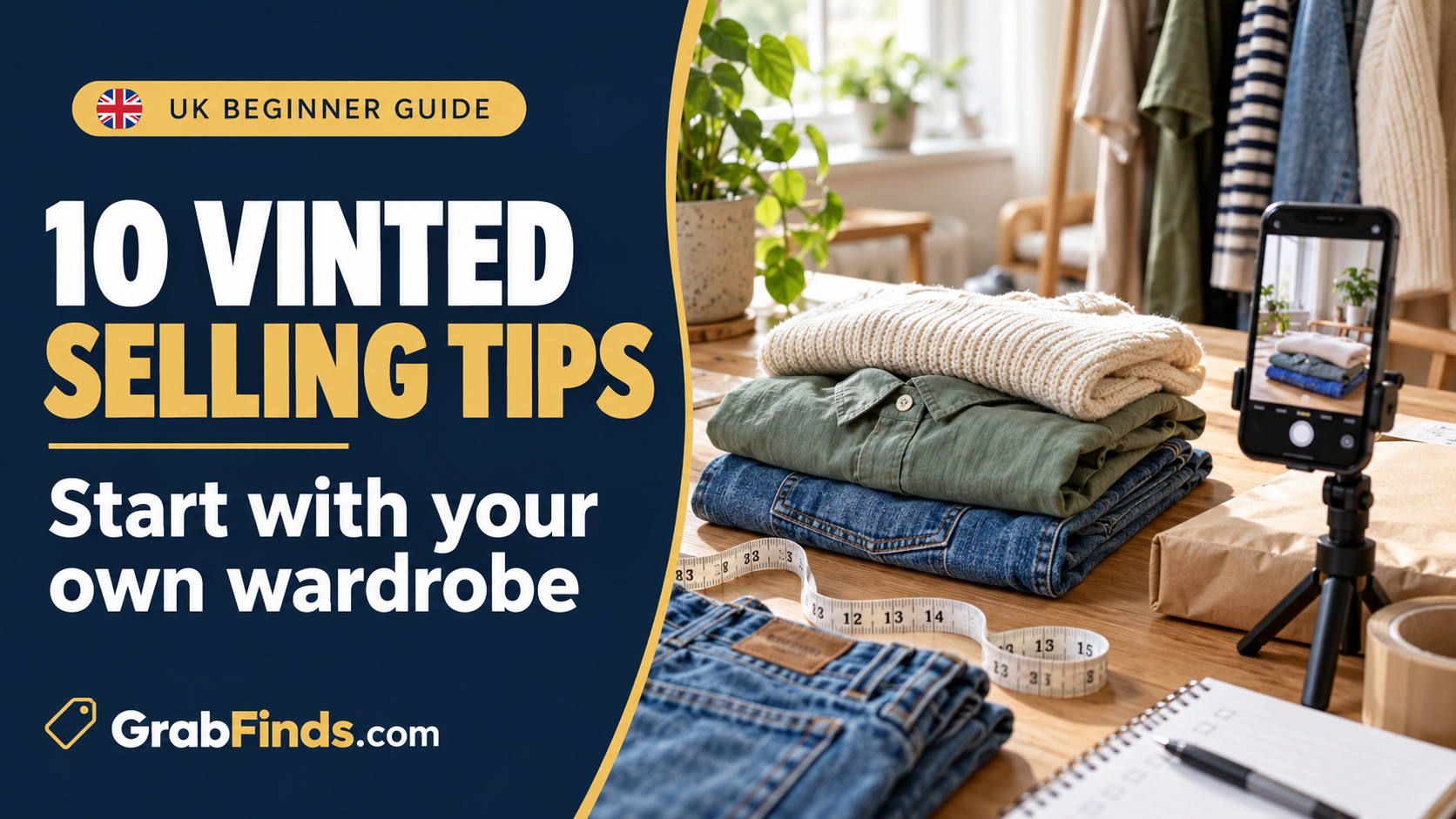
You can start selling used clothes on Vinted without buying stock: choose a few pieces you no longer wear, check their condition, photograph them clearly and price them realistically. The hard part is not uploading a listing. It is giving a stranger enough accurate information to feel comfortable buying.
Before spending money on a reselling business, practise with your own wardrobe. These ten tips take you from choosing your first items to packing a sale and recording what you actually received. There are no guaranteed sales, secret algorithm tricks or invented earnings figures here.
We are documenting our own reselling journey on GrabFinds, starting with items from home. You can browse the GrabFinds shop alongside this guide. Marketplace purchases take place on the platform linked from each item, not through this article.
1. Start with three clothes you already own
Pick manageable items you can describe confidently: a jumper, a skirt or a shirt, for example. Check pockets, seams, fastenings and labels. Put aside anything you are unsure is authentic or suitable for sale until you have checked the rules.
Three completed listings teach you more than a pile of purchased stock waiting to be photographed. Choose pieces you are genuinely ready to let go, then keep them together so you can find them quickly when someone buys.
Important distinction: Vinted’s standard accounts are not for professional selling, including buying or sourcing items to resell for profit. Its current commercial rules direct business sellers to Pro and also restrict new stock bought specifically for resale, including for Pro sellers. Read Vinted’s commercial-selling rules before moving beyond a personal clear-out.
2. Prepare the clothes and inspect them in daylight
Follow the care label when cleaning an item. Remove loose lint, empty pockets and straighten it before taking photos. Do not spray a strong fragrance over an odour or describe something as freshly washed unless it is.
Look closely at collars, cuffs, underarms, hems and high-friction areas. Check for fading, bobbling, stretched fabric, missing buttons and marks. A flaw does not necessarily make an item unsellable, but hiding it creates a poor buying experience and a potential dispute.
For a real example of naming a fault upfront, see our blue Polo by Ralph Lauren shirt listing with faded spots disclosed. The link is an example of disclosure, not evidence of a completed sale.
3. Take your own clear photographs
Use daylight near a window, a tidy background and your phone’s normal camera. A clean hanger or flat surface is enough. You do not need studio equipment.
- Show the whole front as the main image.
- Add the back and useful close-ups.
- Photograph the size, brand and care labels.
- Show every relevant fault clearly, including its position on the garment.
- Add measurement photos where sizing could be uncertain.
Keep colours realistic. Do not use filters or AI editing to erase stains, improve the garment’s condition or create a misleading fit. Use photographs of the actual item you are selling, not a retailer’s picture or another seller’s images.
A useful test: could someone understand the item’s condition without messaging you? If not, add the missing view.
4. Write a title that describes the actual item
Use the genuine brand, garment type, labelled size, colour and one useful detail. For example: Next sage green button-front skirt – UK 16 – red spots. That tells a buyer much more than “Lovely skirt!!!”.
Our Next skirt listing shows how a title can include both the item and its disclosed condition issue. Availability may change.
Avoid unrelated brand names and keyword piles. Select the accurate category and brand in Vinted’s fields; if it has no brand, use the appropriate no-brand option. See Vinted’s upload guidance.
5. Answer the buyer’s questions in the description
Keep the description short but specific. Cover the labelled size, relevant measurements, material from the label, condition, faults and exactly what is included. Do not assume that a size from one brand fits like the same size from another.
Here is an illustrative template to adapt using your own facts:
Navy crew-neck jumper, labelled UK M. Approximate measurements laid flat: chest 52 cm across, length 66 cm. Used condition with light bobbling around the cuffs, shown in the close-up photos. No other faults noticed during inspection. Please compare measurements with a jumper you own. Jumper only; hanger not included.
Do not copy those measurements or condition claims unless they match your garment. Avoid unsupported statements such as “worn once” when you do not know its history.
6. Price for the second-hand market, not the original receipt
Compare similar items by brand, size, condition and style. A seller’s asking price is not proof that an item will sell for that amount. If you cannot find reliable completed-sale evidence, treat active listings as competition rather than confirmed values.
Remember that the buyer sees more than your item price: shipping and the applicable Vinted fee affect the checkout total. Check the current Vinted fee explanation rather than assuming a fixed percentage applies to every purchase.
Set a price you can justify and decide your minimum acceptable amount before offers arrive. An illustrative £8 listing with £1 of packaging and other direct selling costs leaves £7 after those costs if it sells at £8. That is not necessarily profit: the original purchase cost and the purpose of the sale matter.
For a wardrobe clear-out, describe the result as money recovered from unwanted items. Do not call every pound received business profit.
7. Make sensible offers and bundles work for you
You can consider an offer without treating it as an insult. Compare it with your minimum and the effort involved. Decline politely if it does not work for you.
A bundle may make several low-priced pieces more attractive, but check the combined parcel weight, packaging and final amount before agreeing. Do not promise that a bundle will always be cheaper to send.
Start by improving the listing before paying for promotion. A paid boost cannot correct a hidden fault, unclear size or unrealistic price, and it does not guarantee a sale. Avoid repeatedly deleting and reposting items based on supposed algorithm hacks.
8. Check postage before the item sells
Know where your available drop-off points are, what packaging you need and whether the chosen service uses a printed label or digital code. Choose the correct parcel size and account for the packaging, not just the garment.
Use strong, clean packaging that protects clothes from moisture. Remove old labels and barcodes when reusing a suitable parcel. Keep the item dry, fold it neatly and seal the package securely.
For integrated shipping, follow the carrier and label or code in the order. Vinted’s current guidance generally gives five business days to dispatch, with an extension request available in certain circumstances. The deadline shown in your actual order is what you should follow. Keep proof of drop-off. Read how Vinted shipping works.
9. Keep the transaction inside Vinted
Check that the sale appears in your own Vinted account before shipping. Do not rely on a screenshot, email or message claiming that someone has paid. Use the platform’s messaging, checkout and support process.
Be wary of messages asking you to open an unfamiliar payment link, disclose a verification code or enter card details to receive a sale payment. If unsure, open Vinted directly and check its Help Centre rather than following the message.
Do not move a Vinted buyer to another payment method to avoid platform rules. The shop links in this GrabFinds article help readers browse our items; they are not instructions to advertise an external shop inside Vinted listings. Vinted warns that listing descriptions promoting another marketplace may be removed.
See Vinted’s selling basics and listing removal guidance.
10. Track your first sales before buying stock
Keep a simple record of each item, date listed, asking price, agreed price, direct costs, dispatch date and final amount received. An accepted offer or pending balance is not the same as a completed sale.
Once a week, review what happened. Which photos generated questions? Which measurements were missing? Were you spending half an hour preparing an item that recovered very little money? Change one thing at a time.
If you later decide to buy stock, first check platform eligibility, business obligations and the economics of that separate activity. A successful wardrobe clear-out does not automatically prove that buying clothes to resell will be profitable.
Your first-listing checklist
- I own the item and have checked that it is allowed.
- The garment is clean, inspected and easy to locate.
- My own photos show the actual item and its faults.
- The title, size, brand and condition are accurate.
- The description includes useful measurements and disclosures.
- The price reflects condition and competing options.
- I have suitable packaging and understand the shipping method.
- I will confirm payment through Vinted and keep proof of dispatch.
Frequently asked questions
Do I need to buy stock to start?
No. Start with suitable clothes you already own. Buying specifically to resell is a different activity and requires checking Vinted’s commercial rules.
Does Vinted charge sellers a standard selling fee?
Vinted currently says listing and selling are free. Optional paid visibility services and your own packaging or other costs are separate. Check current terms before paying for extras.
Can I sell clothes with marks?
Check the applicable catalogue and condition rules. If an item is permitted, describe and photograph faults honestly and price accordingly. Do not assume that disclosing a fault makes every item eligible.
How quickly will my clothes sell?
There is no guaranteed timescale. Demand, condition, price, season, size and the quality of your listing all matter. Do not budget around an unsold item.
Where can I see the GrabFinds items?
Visit the GrabFinds new and pre-loved shop. Each marketplace item links to its buying platform, where availability, delivery charges and applicable fees should be checked before purchase.
Start with one honest listing today
Choose one item, take clear photos and finish a complete listing before moving on to the next. You do not need a huge wardrobe or a paid course to practise the basics.
Join GrabFinds free to follow our reselling journey, then share a question or progress update in the Community. Keep buyer details and private messages out of public screenshots.
Checked 29 October 2026. GrabFinds is independent of Vinted. Product links promote our own shop; prices and availability can change. Examples are illustrative and sales are not guaranteed.
Support Independent Side Hustle Testing
Enjoying our free guides and real-world experiments? Your voluntary support helps us test more ideas and share the results.
☕ Support GrabFinds on Ko-fiCompletely optional. Free membership remains free.
Comments
Log in or join GrabFinds to leave a comment.