
How to Become a Licensed Private Hire Driver in the UK – Step-by-Step Guide
A practical guide to private hire driver licensing, vehicle licensing, insurance and the checks you may need before carrying paying passengers.
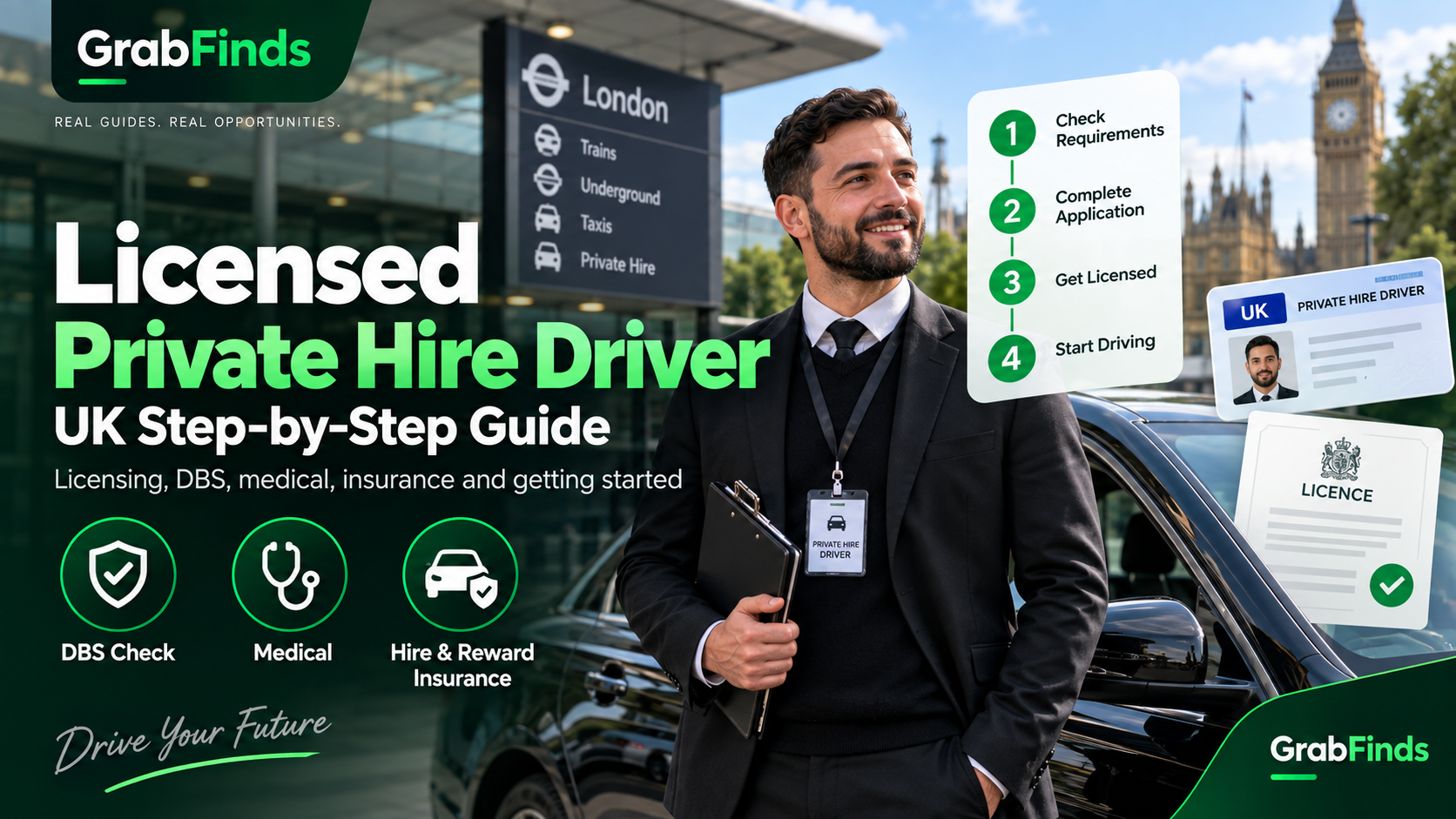
Stage 1: Get Licensed Before You Take Bookings
Airport transfers are not an informal driving side hustle. If you carry paying passengers in a private hire vehicle, the driver, vehicle and operator must be properly licensed. A private hire vehicle can only take pre-booked journeys—it cannot be hailed in the street or wait on a taxi rank.
Important: Rules, fees and tests vary by licensing authority. This guide gives you the usual process, but you must check the current requirements of the council or authority where you plan to work.
1. Understand the three licences
- Driver licence: permits you to drive a licensed taxi or private hire vehicle.
- Vehicle licence: covers the specific car used for paid passenger work.
- Operator licence: is required by the business that accepts and allocates private hire bookings.
If you work for an existing licensed operator, you usually do not need your own operator licence. If you accept bookings directly from customers, you normally do.
2. Choose the correct licensing authority
Outside London, apply to the local council whose private hire system you will work under. In London, apply through Transport for London. GOV.UK says that the driver, vehicle and private hire operator must be licensed by the same authority.
Scotland and Northern Ireland use different licensing systems, so do not rely on an England-and-Wales checklist without checking your national and local rules.
3. Check the entry requirements before paying
Your authority may require a minimum age, a full driving licence held for a set period, right-to-work evidence, proof of address and evidence that you are a fit and proper person. Requirements differ, so download the latest application pack first.
4. Complete the required checks and training
Common requirements include an enhanced DBS check, DVLA driving-record checks, a Group 2 medical assessment, safeguarding or disability-awareness training, a local knowledge or English test, and overseas criminal-record evidence where relevant. Your council may require some or all of these.
5. Apply for the driver licence
Complete the council or TfL application carefully and provide every requested document. Budget for the application fee, medical, DBS, training and tests. Missing evidence can delay the application.
6. Decide how you will get a licensed vehicle
You can use your own suitable car, rent a licensed vehicle or work for a company that provides one. If using your own car, check the authority's age, emissions, inspection, signage, MOT and vehicle-condition rules before buying anything.
7. Arrange the correct insurance
Normal social, domestic and pleasure insurance is not enough. You need insurance that specifically covers private hire or hire-and-reward passenger work. Tell the insurer exactly how the vehicle will be used, including airport transfers and any additional drivers.
8. Work through a licensed operator
Until you hold your own operator licence, bookings must be accepted through an appropriately licensed private hire operator. Do not take private bookings, quote customers and then treat them as personal driving jobs.
9. Keep records and renew on time
Keep copies of licences, insurance, inspection documents and training certificates. Track expiry dates and renew early. Existing licence holders may also need an HMRC tax check when renewing or applying for the same licence type in another area.
Before your first paid airport transfer
- Driver licence active
- Vehicle licence active
- Correct private hire insurance active
- Booking accepted by a licensed operator
- Airport drop-off and pick-up procedures checked
- Price, waiting time and cancellation terms confirmed
Official starting points
- GOV.UK: Driver licences for taxis and private hire vehicles
- GOV.UK: Vehicle licences for taxis and private hire vehicles
- GOV.UK: Private hire operator licences
This guide is educational information, not legal advice. Always confirm the latest requirements with your licensing authority before spending money or accepting work.
Related side hustle
View the full side hustle guideDon't lose this guide
Save it to your free GrabFinds account and come back whenever you're ready.
Save this guideFree account · No card required
Comments
Log in or join GrabFinds to leave a comment.