
How to Start an Airport Transfer Service and Become a Private Hire Operator
A realistic roadmap for getting an operator licence, accepting bookings, pricing profitably, winning customers and adding licensed drivers.
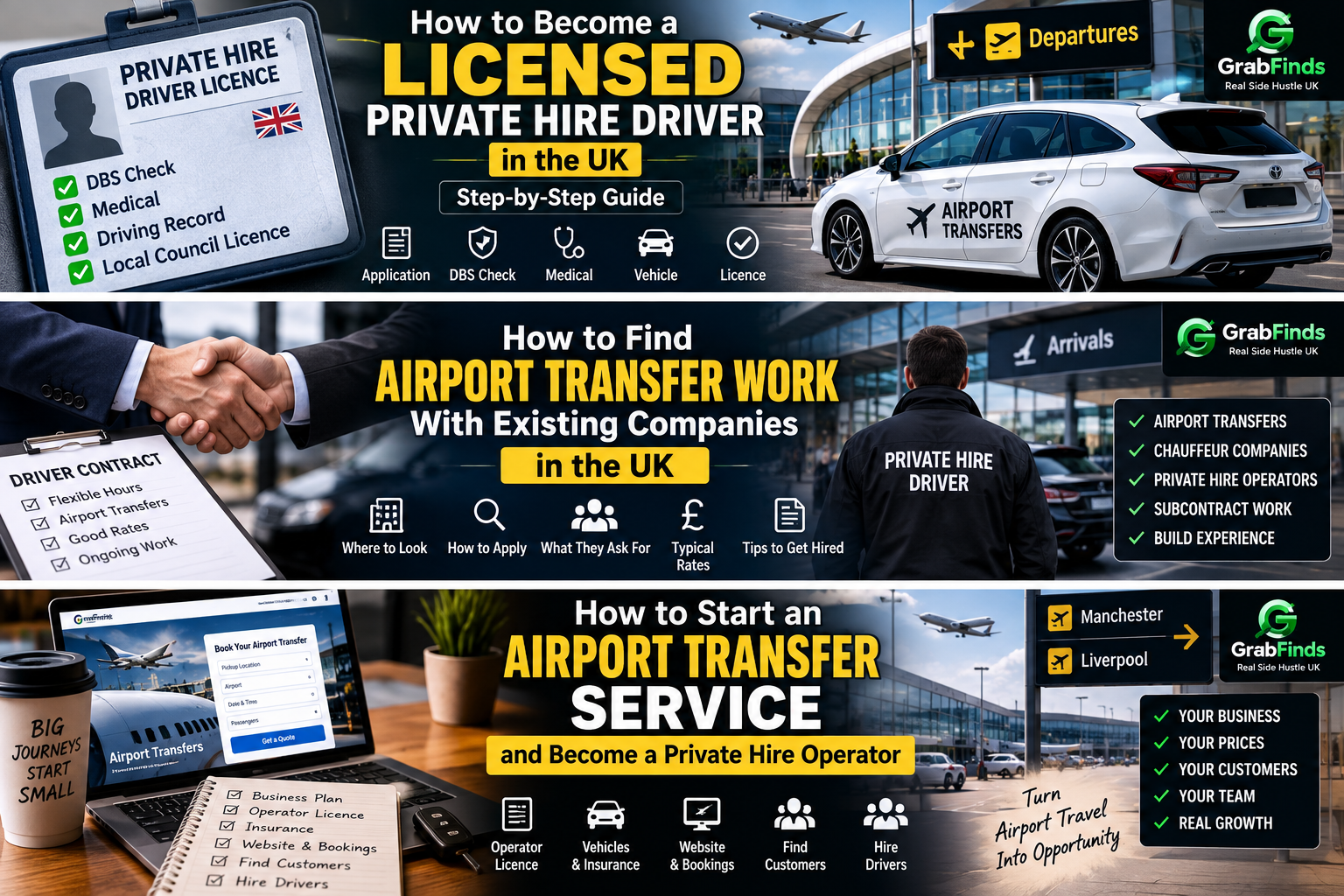
Stage 3: Build a Licensed Airport Transfer Service
Becoming an operator is not simply creating a Facebook page and taking bookings. A private hire operator accepts or invites bookings and arranges licensed drivers and vehicles to complete them. GOV.UK warns that you can be prosecuted for taking paid private hire bookings or supplying drivers without the correct operator licence.
This guide mainly explains the England and Wales model. London is regulated by Transport for London, while Scotland and Northern Ireland have different systems. Always check the rules for your location.
1. Prove the business works before expanding
First understand the numbers as a licensed driver working through an existing operator. Record average fares, total working time, dead mileage, airport charges, waiting time, cancellations and repeat-booking rates. If the service is not profitable with one car, adding drivers will multiply the problems.
2. Choose your licensing authority and model
Outside London, contact the relevant local council; in London, check TfL requirements. Confirm where your operating base can be located, what records and systems are required, whether planning permission is needed and which driver and vehicle licences can work with your operator licence.
GOV.UK states that the driver, vehicle and operator for a private hire journey must be licensed by the same authority. Confirm the current position with that authority before recruiting drivers.
3. Apply for the private hire operator licence
The application may involve a fit-and-proper-person assessment, DBS or background checks, right-to-work evidence, business-premises information, booking and recordkeeping procedures, complaints handling, data protection and a fee. Operator licences can last for up to five years, but the exact term and conditions depend on the authority.
4. Set up a compliant booking process
You need a reliable way to receive, confirm, allocate and retain booking records. Record the passenger's booking details, pickup and destination, date and time, fare or pricing basis, assigned driver and vehicle, and any changes. Keep records for the period required by your licence conditions.
Do not describe a quote or direct message as something other than a booking to avoid operator rules. If your business accepts the journey, the legal and customer-service responsibility sits with the operator.
5. Build the financial model
Your price must cover:
- Driver payment
- Fuel or charging
- Airport drop-off, pickup and parking charges
- Dead mileage and waiting time
- Card fees and booking software
- Insurance, licensing, accounting and marketing
- Refunds, cancellations and customer support
- A genuine profit margin
Create fixed prices only after costing the complete round trip and the time occupied. Cheap prices that leave no margin are not a strategy—they are a fast route to burnout.
6. Put customer terms in writing
Explain what the price includes, when payment is due, how flight delays are handled, included waiting time, extra stops, child-seat arrangements, luggage limits, cancellations, no-shows and refunds. Make the booking confirmation easy to understand.
7. Launch a simple trustworthy brand
Start with a clear name, professional phone number and email, a mobile-friendly website, a quote or booking-request form, and genuine vehicle and driver photos. Show your service area, airports covered, passenger capacity, licensing status, customer terms and privacy information.
8. Find your first customers
- Create and maintain a Google Business Profile where eligible
- Build service pages for the towns and airports you genuinely cover
- Post useful local airport guidance, not only adverts
- Ask satisfied customers for honest reviews
- Use referral cards and repeat-booking reminders
- Build relationships with hotels, holiday accommodation and local businesses
- Track which marketing creates confirmed profitable bookings
Do not waste money boosting generic posts with no clear area, price or booking action.
9. Create operating procedures before hiring drivers
Document how bookings are accepted, allocated and confirmed; how flights are monitored; how drivers communicate with passengers; where airport pickups happen; how delays, breakdowns and complaints are handled; and who can access customer data.
10. Add licensed drivers carefully
Verify every driver's licence, vehicle licence, insurance and identity with the licensing authority where possible. Check capacity, vehicle condition, reliability and customer service. Use a written agreement covering job rates, airport fees, waiting time, cancellations, payment dates, conduct, data protection and what happens if a licence or insurance policy expires.
Employment status depends on the real working arrangement, not simply calling someone “self-employed.” Get professional employment and tax advice before building a driver network.
11. Protect customer data and the business
Airport bookings contain names, addresses, travel dates and flight information. Limit access, use secure systems, keep only what is needed and publish an accurate privacy notice. Consider public liability, employers' liability where required, cyber cover and other business insurance in addition to vehicle cover.
12. Track the numbers every week
- Leads received
- Quotes converted into bookings
- Revenue per journey
- Direct journey cost
- Dead miles and unpaid waiting time
- Customer acquisition cost
- Repeat bookings and reviews
- Complaints, refunds and driver failures
A sensible growth path
- Get properly licensed and learn the job.
- Work with established operators.
- Prove demand with one profitable vehicle.
- Get the operator licence and compliant systems.
- Win repeat customers.
- Add one dependable licensed driver.
- Expand only when quality and margin remain strong.
Official starting points
- GOV.UK: Operator licences for private hire vehicles
- GOV.UK: Driver licences
- GOV.UK: Vehicle licences
This guide is educational information, not legal, tax or employment advice. Confirm current licensing conditions with your authority and take professional advice before accepting bookings or engaging drivers.
Related side hustle
View the full side hustle guideDon't lose this guide
Save it to your free GrabFinds account and come back whenever you're ready.
Save this guideFree account · No card required
Comments
Log in or join GrabFinds to leave a comment.