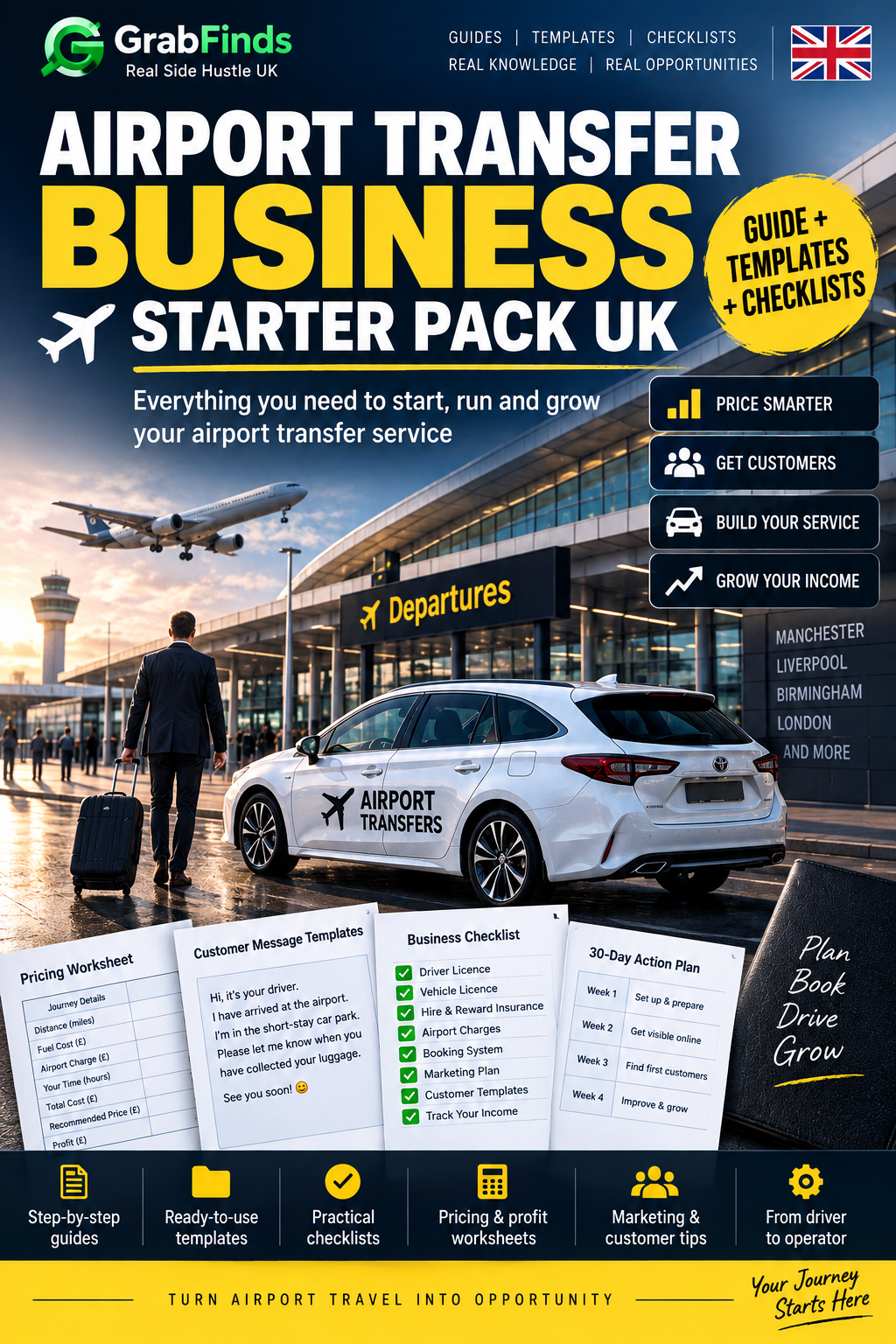

Airport Transfer Startup Checklist UK
A free UK airport transfer startup checklist covering licensing, vehicle checks, insurance, costs, pricing, operator work and your first bookings.
Use this free checklist to plan your route into airport transfers: become licensed, find work with an existing operator, or prepare to run your own service. Copy the planning templates into your notes and mark each item complete only when you have evidence. Licensing rules vary across the UK and between authorities; this is a practical planning aid, not approval to trade or a promise of earnings.
1. Choose your route and licensing authority
- ☐ Decide whether to drive for an existing licensed operator or apply to operate your own service.
- ☐ In England and Wales, identify your council licensing team, or TfL for London. Scotland and Northern Ireland have different processes; confirm the local route before spending.
- ☐ Confirm driver, vehicle and operator licensing requirements and how they must align. A private hire driver badge alone does not authorise an independent booking business.
- ☐ For private hire work, use pre-bookings through the appropriate licensed operator; do not use taxi ranks or accept street hails.
- ☐ Obtain current application fees, document requirements, likely processing times and licence conditions in writing.
2. Driver, vehicle and insurance readiness
- ☐ Check driving-licence eligibility and right-to-work requirements.
- ☐ Complete the background checks, medical, training and assessments required by your authority.
- ☐ Confirm vehicle age, emissions, inspection, seating, accessibility and signage rules before buying or renting.
- ☐ Obtain the required vehicle licence and insurance covering the intended private hire passenger work; ordinary business-use cover is not enough.
- ☐ Check the policy covers you, the vehicle, the work and any additional drivers. Ask about breakdown and replacement-vehicle arrangements.
- ☐ Record renewal dates and keep licences, inspection records and insurance documents accessible.
3. Find work with an existing operator
- ☐ List local airport-transfer and private hire operators that accept your licensing arrangement.
- ☐ Prepare a short introduction with your licensing authority, vehicle, passenger and luggage capacity, availability and contact details.
- ☐ Ask about commission, rent, payment timing, airport charges, waiting time, cancellations, no-shows and empty return journeys.
- ☐ Clarify who accepts and records bookings, confirms prices and deals with complaints.
- ☐ Read the agreement before committing and calculate your likely profit after all costs.
4. Build a realistic startup budget
- ☐ Obtain actual quotes for licences, checks, training, vehicle purchase or rental, insurance and inspections.
- ☐ Budget for fuel or charging, maintenance, tyres, cleaning, breakdown cover, phone, booking software and marketing.
- ☐ Include airport access, parking, tolls and any local charges for each route.
- ☐ Allow for time without paid work, vehicle downtime and an emergency reserve.
- ☐ Check business registration, record-keeping and tax obligations with HMRC or an accountant. Do not assume every cash cost has the same tax treatment.
5. Price the whole job
- ☐ Count all miles: reaching the passenger, the passenger journey, repositioning and an empty return where relevant.
- ☐ Count all time: driving, waiting, loading, airport collection and administration.
- ☐ Add direct costs, a realistic share of overheads and your target return for the time involved.
- ☐ Confirm the total price and what it includes before accepting the booking.
- ☐ State the agreed terms for extra stops, flight delays, waiting, cancellations, no-shows and payment.
- ☐ Track actual revenue, total miles, total time and costs after each trip; gross takings are not profit.
6. Prepare your booking and pickup process
- ☐ Collect the date, pickup address, airport, terminal, flight number, passenger contact, passenger count and luggage details.
- ☐ Check accessibility needs and child-seat arrangements before confirming that the vehicle is suitable.
- ☐ Send a written confirmation with the agreed price, payment terms, pickup details and cancellation terms.
- ☐ Check current airport pickup rules, approved waiting areas and charges; monitor the flight and agree when the passenger should contact you.
- ☐ Keep a realistic traffic buffer and a clear plan for breakdowns or other disruption.
- ☐ Protect passenger information and use secure booking records with appropriate access and retention.
7. Prepare to operate and grow your own service
- ☐ Before inviting or accepting bookings independently, confirm and obtain the operator or booking-office permissions required in your area.
- ☐ Confirm any premises requirements and the required booking, driver, vehicle and complaint records.
- ☐ Before engaging drivers, verify licences, insurance and eligibility for your operating arrangement. Agree responsibilities, payment and service standards.
- ☐ Define the area, airports, hours, vehicle capacity and jobs you can reliably cover.
- ☐ Build clear website and quotation information, then approach suitable local hotels, businesses and repeat customers.
- ☐ Ask satisfied customers for honest reviews and measure enquiries, bookings and profit before increasing advertising spend.
MY AIRPORT TRANSFER STARTUP PLAN
Area and airports: ___
Route: existing operator / own licensed service
Licensing authority and contact: ___
Documents, checks and permissions still needed: ___
Vehicle and insurance quotes: £___
One-off startup costs: £___
Monthly fixed costs: £___
Emergency reserve: £___
Operators to contact: ___
Three next actions and deadlines: ___
Earliest realistic start date (subject to approvals): ___

JOB COST WORKSHEET
Customer price / operator payout: £___
Total miles, including empty travel: ___
Total working hours, including waiting: ___
Fuel or charging: £___
Airport fees, parking and tolls: £___
Commission/payment fees: £___
Maintenance allowance and allocated overheads: £___
Total estimated costs: £___
Estimated profit before personal tax: revenue minus costs = £___
Estimated profit per working hour: profit ÷ total hours = £___
Avoid counting the same cost twice.
8. Your first 30 days of preparation
- Week 1: confirm your licensing route, requirements and local demand.
- Week 2: obtain vehicle and insurance quotes, contact operators and complete the budget.
- Week 3: prepare your booking records, customer messages, route costing and service terms.
- Week 4: review outstanding approvals and test your process. Start paid work only when every required licence, insurance policy and operating arrangement is in place.
- A 30-day preparation plan is not a promise that licensing will be completed in 30 days.
Official checks before you start Check the latest GOV.UK driver licensing guidance, vehicle licensing guidance and private hire operator guidance. These pages explain the England and Wales route and link to the different processes for Scotland and Northern Ireland. Confirm the exact requirements with your licensing authority and insurer. Use the related Airport Transfers guide and operator tutorial for the next steps. The Airport Transfer Business Starter Pack UK is the separate companion ebook for more detailed worksheets and templates.